

You hear a click every time you open your mouth. Then one morning, your jaw feels stuck, chewing becomes uncomfortable, and you start avoiding foods that require much effort.
These symptoms can be linked to problems with the temporomandibular joint, or TMJ—the small joint connecting your jaw to your skull. In selected cases, Jaw Arthroscopy Surgery in GK 2 may be considered when simpler treatments have not provided enough relief.
You use your jaw joint every time you chew, speak, yawn, or swallow. Problems with this joint can cause jaw pain, clicking, stiffness, limited movement, headaches, or a feeling that the jaw is not moving normally.
But a clicking jaw does not automatically mean you need surgery.
The first step should be understanding what is actually happening inside and around the joint.
A specialist assessment may be useful if you experience:
Persistent jaw joint pain
Difficulty opening your mouth
Jaw locking
Pain while chewing
Repeated clicking with discomfort
Jaw stiffness
Facial or temple pain
A change in how your jaw moves
Symptoms that keep returning despite conservative treatment
If your jaw suddenly becomes locked or you develop severe swelling or other concerning symptoms, seek prompt professional care.
Jaw arthroscopy is a minimally invasive procedure that uses a small camera and specialised instruments to examine and, when appropriate, treat problems inside the TMJ.
Because the approach uses small access points rather than a large surgical opening, it may be suitable for certain joint conditions. However, it is not appropriate for every patient.
A detailed evaluation is needed before recommending it.
This is one area where we believe patients should be cautious about rushing toward procedures. Many TMJ problems can initially be managed through non-surgical approaches depending on the cause.
Treatment may include activity modification, medication, exercises, physical therapy, management of teeth grinding, or other conservative measures.
If symptoms persist or the joint problem requires intervention, arthroscopy may then become part of the discussion.
We have seen patients who lived with jaw clicking for years and only sought help once the joint began locking or chewing became difficult.
After assessment, the treatment plan focused on the actual joint problem rather than simply treating the clicking sound. In cases where a procedure was appropriate, having a clearer diagnosis helped the patient understand why it was being recommended.
The lesson is simple: a symptom should not automatically dictate the treatment; the underlying joint problem should.
Many people hear a click and immediately assume their jaw is being damaged. That is not always the case.
Some people have clicking without pain or loss of function and may not need treatment at all. Concern increases when clicking is accompanied by pain, locking, restricted movement, or other functional changes.
Don't treat the sound. Treat the problem behind the sound.
Depending on the diagnosis, TMJ arthroscopy may be considered for selected conditions involving:
Persistent joint pain
Internal joint problems
Restricted jaw movement
Joint inflammation
Certain disc-related conditions
Jaw locking
Problems that have not responded adequately to conservative care
Your specialist will determine whether arthroscopy is appropriate after examination and any necessary imaging.
A specialist TMJ practice may address:
TMJ disorders
Jaw joint pain
Jaw locking
Limited mouth opening
Arthroscopic TMJ procedures
Joint inflammation
Disc-related jaw problems
Conservative TMJ treatment
Post-treatment jaw rehabilitation
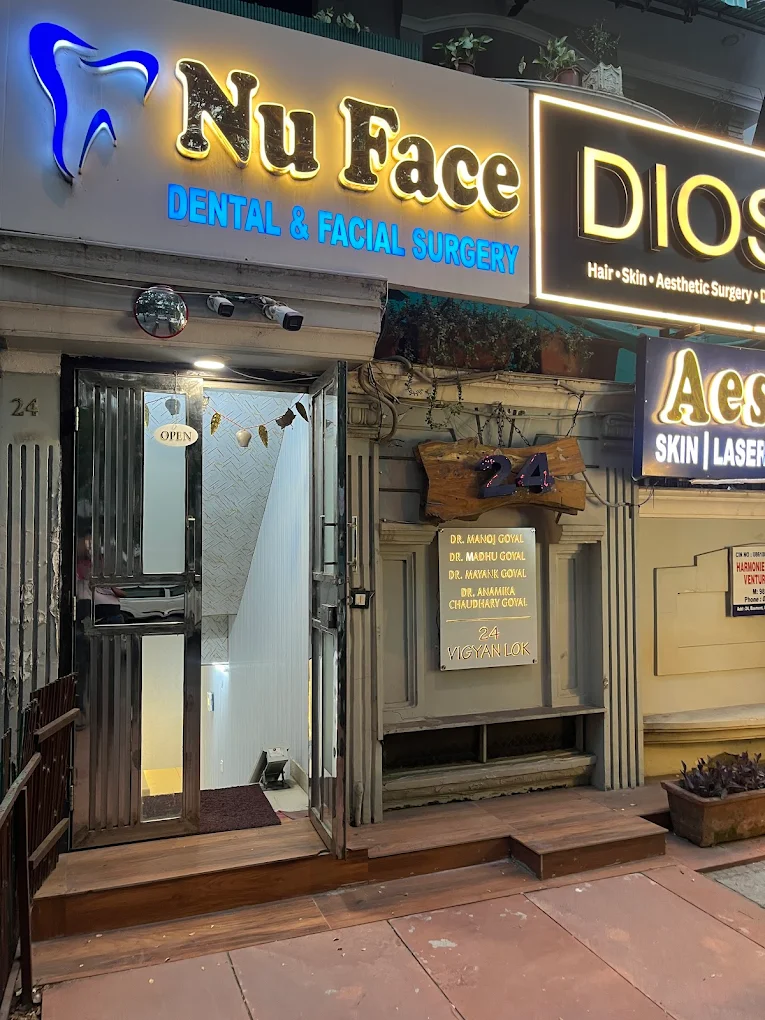
At Nu Face, our approach is to understand the cause of jaw symptoms before recommending an intervention. If surgery is appropriate, the patient should understand both the expected benefit and available alternatives.
Your specialist may assess how far your mouth opens, how your jaw moves, where the pain occurs, and whether there is clicking or locking.
Your dental and medical history will also matter. Imaging may be recommended to understand the joint and surrounding structures more clearly.
Ask questions about the purpose of the procedure, expected recovery, risks, alternatives, and what happens if you choose not to proceed.
Recovery after jaw arthroscopy varies depending on the specific procedure and individual condition. Your specialist may recommend exercises, dietary adjustments, medication, and follow-up care.
Following the prescribed rehabilitation plan is important because restoring comfortable jaw movement is part of the overall goal.
It depends on the condition being treated. Arthroscopy is less invasive and can be useful for selected TMJ problems, while some conditions may require other surgical approaches. A specialist assessment determines the appropriate option.
Yes. Depending on the cause and severity, many TMJ problems can initially be managed without surgery through conservative treatment and lifestyle changes.
Recovery varies according to the procedure and individual healing. Your specialist can provide a more accurate recovery plan after evaluating your specific condition.
If you are avoiding certain foods, struggling to open your mouth, or experiencing repeated jaw locking, it is worth finding out what is causing the problem.
If you are considering Jaw Arthroscopy Surgery in GK 2, consult Nu Face for a detailed TMJ assessment. The right treatment may be conservative care or surgery—the important part is choosing it based on your actual joint condition.
| Tags: | #Jaw Arthroscopy Surgery in South Extension, # Jaw Arthroscopy Surgery in Gk 1 , #Jaw Arthroscopy Surgery in Gk 2 , #Jaw Arthroscopy Surgery in East of Kailash |


