

You have been told that you may need an oral or facial procedure, and naturally, you start wondering about the technology being used. Will the treatment be precise? How much tissue will be affected? What will recovery look like?
This is where Laser Guided Surgery in Saket may become part of the conversation. Laser technology can be used in selected dental and oral procedures to improve precision and control, but it is important to understand what it can—and cannot—do.
Laser-assisted treatment uses concentrated light energy for specific clinical applications. Depending on the procedure, lasers may be used to work on soft tissue or assist with selected dental and oral treatments.
However, choosing a procedure simply because it involves a laser is not the right approach.
The technology should serve the treatment goal—not become the treatment goal itself.
Depending on the clinical situation, laser-assisted procedures may be considered for selected applications such as:
Soft-tissue procedures
Gum-related treatments
Minor oral procedures
Tissue reshaping
Certain dental surgical applications
Selected maxillofacial procedures
Not every patient or procedure is suitable for laser treatment. A specialist needs to determine whether it offers a meaningful advantage in your particular case.
In appropriate cases, laser technology can provide controlled treatment of targeted tissue. Depending on the procedure, this may support reduced bleeding and more precise tissue management.
But results depend on much more than equipment. Diagnosis, treatment planning, surgical skill, sterilisation, aftercare, and patient-specific factors all matter.
A sophisticated device cannot replace good clinical judgment.
We have seen patients become attracted to a procedure simply because they heard that “laser means painless.” During consultations, it becomes important to explain that no technology can guarantee a completely pain-free experience or identical recovery for everyone.
The better approach is to understand what procedure you actually need and whether laser assistance provides a useful benefit in your case.
Patients often assume that the newest technology must automatically produce the best result. That's not how good treatment decisions work.
A conventional technique may sometimes be more appropriate for a particular procedure, while laser assistance may be valuable in another situation.
We believe patients should ask a more useful question: “What technology gives me the best option for this specific procedure?”
The dental and oral healthcare industry has continued to adopt digital planning, imaging, guided procedures, and laser-assisted technologies. The broader trend is toward greater precision and more personalised treatment planning.
Still, technology should be viewed as an aid to clinical expertise rather than a substitute for it.
Depending on your condition, laser-assisted care may be discussed for:
Soft-tissue procedures
Gum treatments
Oral surgical procedures
Tissue contouring
Selected dental procedures
Minor surgical applications
Selected maxillofacial procedures
Treatment planning using modern imaging
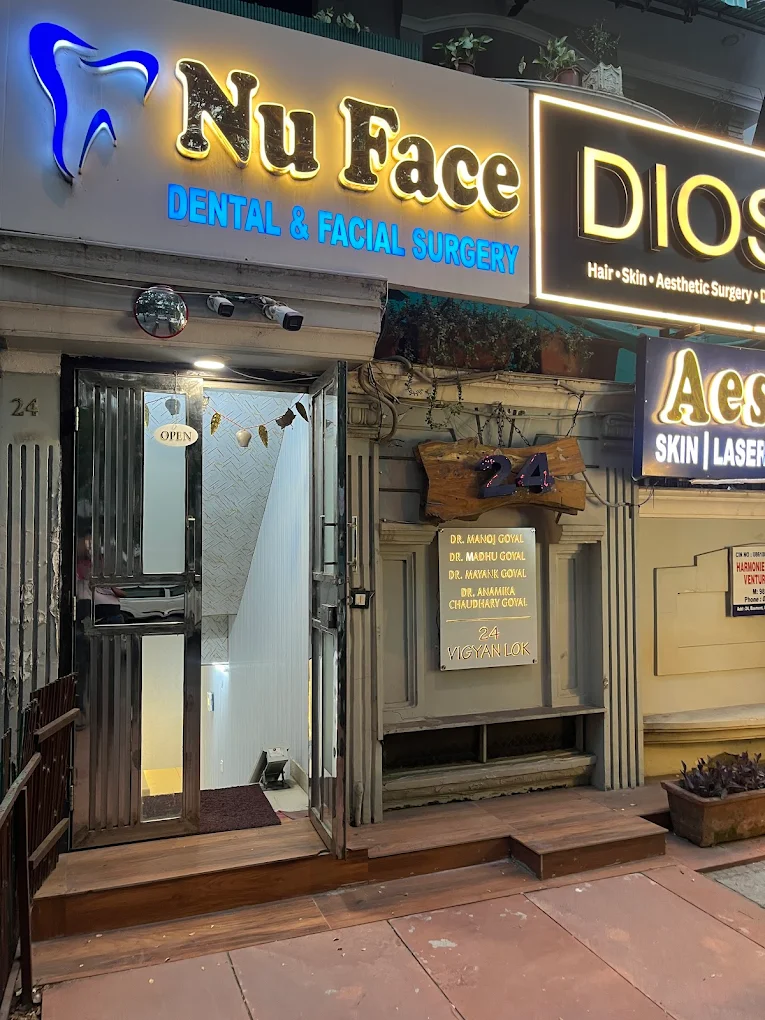
At Nu Face, we focus first on the patient's condition and desired outcome. If laser-assisted treatment can provide a meaningful benefit, it can be considered as part of the treatment plan.
Your specialist will discuss your symptoms, dental history, previous treatments, and the reason for the proposed procedure.
Depending on the problem, an examination and imaging may be required. Your clinician can then explain whether laser assistance is suitable, what alternatives exist, and what you can realistically expect.
This is also the right time to ask about risks, recovery, costs, and aftercare.
Even when laser technology is used, the treated area may need time to heal. The recovery period depends on the type and extent of the procedure.
You may receive instructions about eating, cleaning the area, medication, activity, and follow-up. Following these instructions carefully is an important part of the treatment.
No procedure should be described as guaranteed to be completely painless. Appropriate anaesthesia and pain management can help make treatment more comfortable, but the experience varies according to the procedure and individual patient.
Not necessarily. Laser technology can offer advantages for selected procedures, but traditional techniques may be more appropriate for others. The correct choice depends on your diagnosis and treatment requirements.
Laser-assisted procedures can be safely used when appropriate technology, proper training, suitable patient selection, and appropriate clinical protocols are followed. Your specialist should explain the risks and benefits before treatment.
Technology can make treatment more precise, but the most important decision is still choosing the right treatment for your condition.
If you are exploring Laser Guided Surgery in Saket, consult Nu Face for a detailed assessment. Ask what procedure you need, why it is recommended, whether laser assistance genuinely benefits your case, and what alternatives are available.
| Tags: | #Laser Guided Surgery in South Extension, # Laser Guided Surgery in Gk 1 , #Laser Guided Surgery in Gk 2 , #Laser Guided Surgery in East of Kailash |


